AI disclosure: this content, including any imagery, was artificially generated.
Why the forearm is the easiest first placement
Forearm tattoo ideas are where most people start, and not for reasons of fashion: forearm work makes up close to a third of all first-tattoo bookings. This is the most forgiving placement on the body. The surface is even, which gives the artist a stable canvas to draw on.
It is visible when you want it to be and easy to cover with a long sleeve when you do not. Healing is straightforward because you can reach the area with both hands, and the skin here is not constantly bending like an elbow or rubbing like a waistband.
The one real decision to make before anything else is inner versus outer. Everything else follows from that choice.
Inner vs outer, compared
The inner forearm is the side that faces you. The skin is softer and paler, the surface is slightly more tender, and some people describe the sensation as more of a sting than a scratch.
The outer forearm is the side that faces the world. The skin is firmer, the surface is more even, and the area is more visible in everyday life.
Sun exposure matters more than most beginners realise. The outer forearm catches UV constantly, which fades ink faster over the years. The inner forearm stays paler and holds colour longer. Neither side is wrong: the outer suits bold graphic work you want on display, the inner suits detailed pieces you reveal on your own terms.
Sizing and orientation
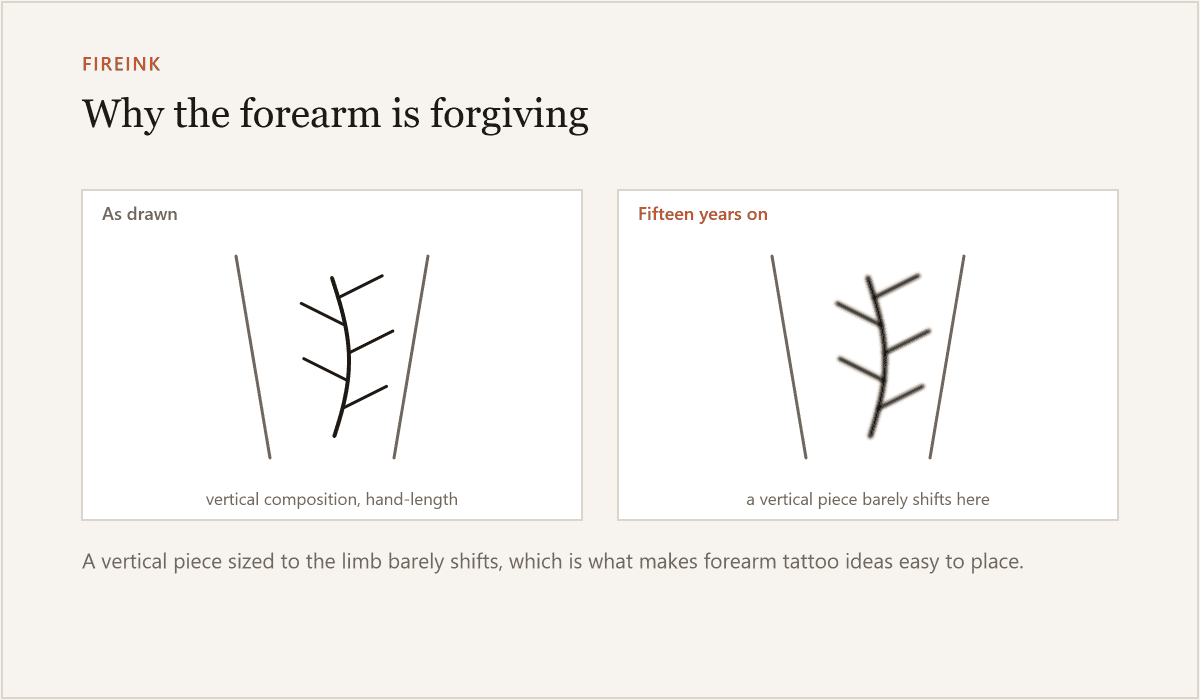
The forearm is long and narrow, and that shape dictates how a design should sit. Vertical compositions work best because they follow the natural line of the bone from elbow to wrist. A dagger, a stem of flowers, a snake, a column of script: these all suit the forearm because they stretch along the limb rather than fighting it.
Orientation is the choice people get wrong by not thinking about it. A design can face you, so it looks correct when you lift your arm. Or it can face away, so it looks correct to everyone else. Most artists suggest orienting the piece for the viewer, because a portrait facing your own face will read upside down in every photograph.
Script is the exception. Words are often set facing the wearer, because the message is personal.
Size should match the space. Too small and you leave awkward empty skin around the piece; too large and it wraps around the arm and distorts. The sweet spot for a single forearm tattoo is roughly the length of a hand, from wrist crease to just below the elbow. That gives the artist room for detail without forcing the design to bend around the curve of the arm. If you want to see how a subject looks at that scale before you book a consultation, the tattoo design generator will lay one out at forearm proportions in about a minute.
Forearm tattoo ideas that suit the shape
Long, narrow forearm tattoo ideas dominate for good reason. Botanical pieces such as lavender sprigs, olive branches or wildflower stems follow the vertical line cleanly, and traditional daggers and swords do the same. A single snake coiled in a loose S-curve uses the full length of the arm without looking cramped.
Geometric patterns and dotwork also suit the area. Mandalas and ornamental bands can wrap the forearm or sit as a vertical column, and they age well because bold lines hold their shape over decades. The same logic runs the other way for fine-line work, which is popular right now but fades faster on the outer forearm; on the inner forearm it lasts longer with less maintenance.
What does not suit the shape is a wide, square design. A large portrait or a sprawling landscape needs a broader, more even canvas such as the thigh or the back. Forcing one onto a narrow arm means wrapping it around the curve, and you live with that compromise permanently.
Planning for a sleeve later
Many people start with a single forearm piece and later decide they want a full sleeve. If a sleeve is even a possibility, say so before the artist starts, because the placement of the first piece determines how future work connects to it.
A standalone tattoo usually sits centred with clear skin on all sides, which looks balanced on its own. A sleeve needs flow instead: pieces that connect, overlap or share background shading. A centred first tattoo can become an island that is hard to integrate, so an experienced artist will set it slightly off-centre or angle it so later work builds around it. Ask directly: if I extend this later, where should it sit?
Pain and healing
The forearm is one of the least painful places to get tattooed. Most people describe the sensation as a hot scratch or a vibrating pencil. The outer forearm is easier than the inner, and the area near the wrist and the crease of the elbow is more sensitive but still manageable.
Healing takes about two to three weeks for the surface layer of skin, and the deeper layers keep settling for up to three months. During the first week the tattoo weeps a little plasma and ink. Wash it gently with unscented soap, pat it dry, apply a thin layer of aftercare cream, and keep it out of direct sun.
The thing beginners underestimate is the itch. Around day five or six the healing skin starts to itch; slapping the area gently helps and scratching does not, because a scratched scab can pull ink out and leave a pale spot. Most artists offer one free touch-up within the first year if that happens.
Want to see how an idea sits on a forearm before you book? Pick inner or outer forearm in the tattoo design generator and it draws a composition shaped for it in 30 to 60 seconds — free, no signup, nothing uploaded. Take the result to an artist as a starting point.
FAQ
How much does a forearm tattoo cost? In the UK, expect £150 to £400 for a palm-sized piece from a reputable artist. Hourly rates run from £80 to £150 depending on the studio and the artist’s experience.
Can I use a reference design I found online? As a starting point, yes. Good artists use references to understand the style and elements you like, then draw something original for your arm. Copying another person’s tattoo line-for-line is not something a reputable studio will do, and whichever studio you take it to should be registered with its local council.
Will a forearm tattoo affect my job prospects? In most UK workplaces, no. Some employers still ask staff to cover visible tattoos in customer-facing roles, and a forearm piece is easy to cover with a long sleeve.
What if I want something small? A forearm can carry a small piece perfectly well, though the rules change: see how smaller designs age before you commit to one.
Does the forearm change with age? Less than almost any other body part. Weight fluctuations show up in the upper arm, stomach and thighs long before the forearm, which is another reason it is a reliable placement.